






Fall. It’s one of the nicest times of year to travel. The summer crowds start to thin out. The temperatures are often more comfortable. There is just something undeniably appealing about a trip when the leaves changing color.
At least, that’s the picture people tend to have in their heads.
The reality, though, might be a little more complicated.
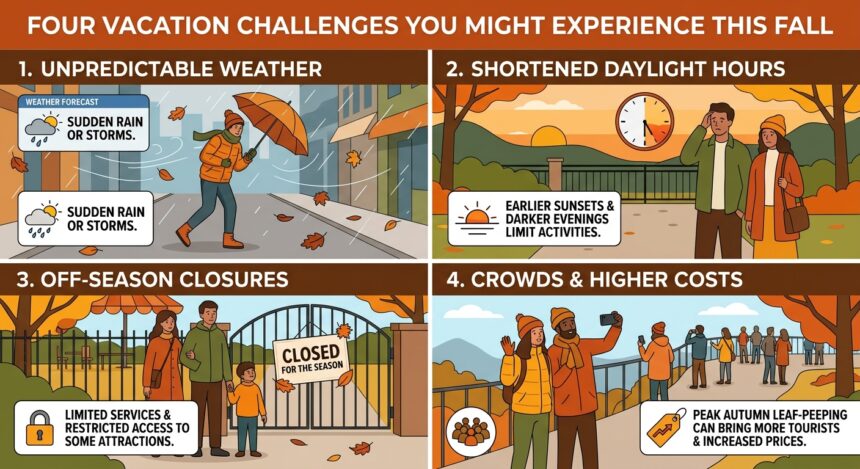
Fall travel usually comes with its own set of challenges – from unexpectedly high prices to unpredictable weather and popular destination that are anything but quiet. And because the days get shorter as the season goes on, you may have less time than you think to fit everything into your itinerary.



None of this means you should avoid traveling in the fall. It just helps to know what you might be dealing with before you book. Depending on the cost of your trip and your plans, trip cancellation insurance might be worth considering, too. This is particularly true if you want some protection in case of severe weather or sickness.
Keep reading on to learn four common challenges you should keep in mind.
- The “Second Peak” Price Spike
There’s a common belief that travel gets cheaper the moment summer ends. And sometimes, that does happen.
But not everywhere.
Fall has become a popular travel season in its own right – especially around school breaks, long weekends, and major holidays. Then there’s the demand for fall foliage. Hotels in particular can fill up quickly when the leaves are at their best, and prices rise along with demand.
You might find that a quiet midweek trip is reasonably priced, while traveling just a few days later costs considerably more.
If you’re hoping to keep costs down, flexibility helps. Look at different travel dates. Consider staying slightly outside the most popular areas. Don’t assume that waiting until the last minute will always save you money.
Sometimes, it does. Sometimes, though, everyone else has the exact same ideas.
- Extreme and Unpredictable Weather
The weather during fall can be wonderful right up until it just… isn’t.
One days might be sunny and warm enough for a t-shirt. The next could bring heavy rain, strong winds, or a sudden drop in temperature – and you’ll need layers to stay warm.
This can be particularly frustrating if your vacation revolves around being outdoors. A hiking trip. A beach weekend. A scenic drive. A sightseeing itinerary. All of these look very different when the weather turns.
If you’re traveling somewhere with a history of severe weather during the fall, do your research. It’s always worth paying attention to local forecasts. You should also have a backup plan.
Pack for more than the weather you’re hoping for. Layers are always a good idea during this time of year. Similarly, a waterproof jacket is a must. It’ll take up very little room, especially when compared with the regret of leaving it at home.
It’s also sensible to avoid planning every single hour of your trip around outdoor activities. Have a few indoor options in mind. A rainy afternoon is much easier to enjoy when you’re not desperately trying to figure out what to do next.
- “Overtourism” in Foliage Hotspots
The whole point of traveling in the fall might be to see the leaves.
The problem with that is you’re probably not the only person with that plan. It’s a common dream, after all.
Some destinations become extremely busy during peak foliage season. Certain areas suddenly attract far more visitors than they usually see. Small towns. Scenic roads. Hiking trails. National parks. These sort of places.
That means traffic, crowded parking lots, booked-up hotels, and accommodation that’s tougher to find than you expected.
If seeing fall colors is high up on your list, try to look beyond the most famous spots. A less well-known town or park may offer a similar experience – all without the crowds of people!
Travel during the week, too. That could help. Arriving early in the morning may not sound like the most relaxing start to a vacation. Not if you like lazy mornings. But it could make a major difference if you’re hoping to enjoy a popular viewpoint before the crowds arrive.
And remember, foliage doesn’t operate on a strict timetable. The colors change from year to year, depending on the weather. Try not to plan your entire trip around the expectation that every single tree will look exactly like the photographs.
- Shorter Daylight Hours
In summer, you could finish dinner and still have plenty of daylight left. By fall, evenings arrive much earlier.
That matters if you’re planning long drives, hikes, outdoor tours, or a packed sightseeing schedule.
Before you leave, have a look at sunrise and sunset times for your destination. It sounds like a small detail, sure. But it affects how you plan your day. A scenic hike that would be perfectly comfortable in July might need an earlier start in October.
You may also need to rethink how much you can realistically fit into one day.
That isn’t necessarily a bad thing. Shorter days are a good excuse to slow down a little bit. Have a longer dinner. Find a cozy café. Spend the evening somewhere local rather than racing to squeeze one more attraction into the schedule.
To conclude, fall is a fantastic time to get away – if you’re realistic with your expectations. The four challenges in this post are crucial to keep in mind, ensuring your trip is a memorable and enjoyable one.