






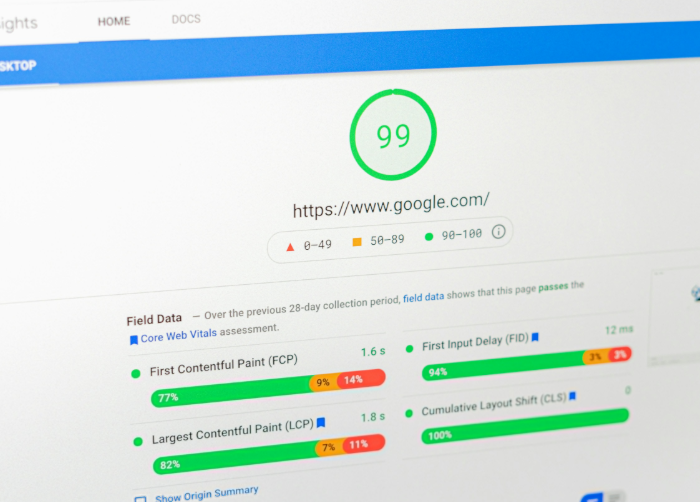
Understanding Website Speed
Website speed refers to the time it takes for a web page to load completely and is a critical factor influencing user experience and search engine rankings. Several metrics are commonly used to quantify website speed, including loading time, time to first byte (TTFB), and page size.
Loading time is the most apparent metric; it measures the total time from when a user requests a web page until it is fully rendered in the browser. Quick loading time enhances user satisfaction, while delays can lead to higher bounce rates. Time to first byte, on the other hand, focuses on the responsiveness of a web server and the time taken to receive the first byte of content after a request is made. Both metrics serve as essential indicators of performance, guiding web developers in optimizing their sites.
Page size is another noteworthy metric, referring to the total weight of all elements on a page, including HTML, CSS, JavaScript, images, and multimedia content. As websites increasingly incorporate rich media, larger page sizes can significantly affect loading times. Therefore, optimizing page size is vital for improving overall speed and ensuring smoother navigation for users.
Measuring website speed can be accomplished through various tools, such as Google PageSpeed Insights, GTmetrix, or Pingdom. These tools provide detailed analyses and actionable insights regarding page load times and other performance-related metrics. Understanding and monitoring these aspects of website speed are crucial for webmasters aiming to enhance user experiences and, therefore, improve their standing in search engine results.
In the digital landscape, where user expectations for quick load times are ever-increasing, optimizing for speed has become a necessity, not a luxury. By prioritizing website speed, businesses can foster better user engagement, lower abandonment rates, and ultimately, higher conversion rates.
The Relationship Between Speed and User Experience
Website speed plays a critical role in shaping user experience, significantly influencing user engagement rates and bounce rates. When a website loads quickly, users are more likely to remain on the site and engage with its content. Conversely, slow-loading websites often lead to higher bounce rates, as visitors are less willing to wait for content to appear. In today’s fast-paced digital landscape, where attention spans are limited, fast loading times have become essential for retaining visitor interest.
Research has consistently shown a strong correlation between site speed and user satisfaction. For instance, studies have indicated that a delay of just one second in page load time can lead to a reduction in user satisfaction and engagement. According to a report from Google, 53% of mobile site visitors will leave a page that takes over three seconds to load. Additionally, a well-known study by Akamai found that a 100-millisecond delay in load time can decrease conversion rates by 7%. These statistics highlight the urgency of optimizing website speed not only to improve user interaction but also to enhance overall conversion rates.
Moreover, website speed affects user experience beyond just initial load times. It influences how users perceive the professionalism and reliability of a website. A smoothly operating site fosters confidence, encouraging users to explore further and engage with more content. On the other hand, sluggish sites can create frustration, leading users to abandon their visits altogether. In summary, optimizing website speed is critical for improving user experience, cultivating trust, and lowering bounce rates, ultimately resulting in better engagement and user retention.
Speed and Its Impact on Conversion Rates
Website speed plays a crucial role in determining conversion rates, which directly affects a business’s bottom line. Businesses that prioritize speed not only enhance user experience but often see significant increases in their conversion metrics. Research indicates that a one-second delay in page load time can lead to a reduction in conversions by up to 7%. This statistic alone highlights the necessity for businesses to maintain an efficient website, as even minor delays can have substantial financial implications.
A notable example of this correlation can be seen with leading e-commerce platforms. For instance, Amazon reported that every 100 milliseconds of improved load time translates to an increase in sales by approximately 1%. With their vast sales volume, this incremental improvement equates to millions of dollars in revenue gained simply by optimizing web performance. Such metrics showcase how critical it is for businesses to pay attention to website speed as it can be a decisive factor in whether potential customers complete a purchase or abandon their shopping carts.
Moreover, a case study from Walmart demonstrates the impact of website speed on conversion rates as well. They found that when their page load time decreased by just one second, conversions increased by 2%. This positive effect on user engagement illustrates how a fast website can streamline the customer journey, making it more likely for visitors to follow through with their transactions. In summary, businesses looking to improve their conversion rates should prioritize optimizing their website speed to not only enhance user satisfaction but also to potentially increase their revenue and overall success.
Search Rankings and Website Speed
Website speed plays a pivotal role in determining search engine rankings, particularly in the case of major search engines such as Google. In recent years, Google has increasingly prioritized factors that contribute to a positive user experience, and website speed is among the most significant of these factors. A faster website not only improves user satisfaction but also enhances the likelihood of higher rankings in search results.
Core Web Vitals, a set of standardized metrics introduced by Google, serve as essential indicators of a webpage’s overall performance in terms of load time, interactivity, and visual stability. These metrics are instrumental in assessing user experience and are now incorporated into Google’s ranking algorithms. The three primary components of Core Web Vitals include:
- Largest Contentful Paint (LCP): This measures the loading performance of a webpage. A good LCP score is one that occurs within 2.5 seconds of when the page first starts loading.
- First Input Delay (FID): This gauges the interactivity of a page. A low FID score, ideally less than 100 milliseconds, is necessary to ensure a seamless user experience.
- Cumulative Layout Shift (CLS): This metric evaluates the visual stability of a page by measuring unexpected layout shifts. A good CLS score should be less than 0.1.
Search engine optimization (SEO) practitioners need to understand the implications of these metrics thoroughly as they directly impact the website’s performance in search rankings. Ensuring that web pages load quickly and provide a stable browsing experience not only enhances user engagement but also aligns with Google’s emphasis on Core Web Vitals. Consequently, websites that meet or exceed the recommended thresholds for these metrics are likely to enjoy better visibility in search results, fostering increased traffic and user interaction.
In essence, the connection between website speed and search rankings is inextricable. The growing significance of Core Web Vitals reinforces the notion that optimizing website speed is an essential aspect of effective SEO practices. Organizations striving to enhance their online presence must therefore prioritize technical performance alongside content strategy to achieve favorable outcomes in search engine rankings.
Technical Factors Influencing Website Speed
Website speed is a crucial component of overall user experience, affecting everything from visitor retention rates to search engine rankings. Several technical factors can significantly impact how quickly a website loads, and understanding these elements is essential for optimizing performance.
One of the primary factors that affect website speed is image optimization. Large image files can slow down page loading times, leading to a frustrating experience for users. By compressing images and utilizing appropriate formats such as JPEG or WebP, websites can dramatically reduce the size of image files without sacrificing quality, thereby enhancing loading speeds.
Another critical aspect to consider is server response times. The performance of a server largely dictates how quickly content is delivered to users. Factors such as the quality of the hosting service, server resources, and the geographical location of the server can all affect response times. Websites hosted on faster servers typically enjoy lower latency and faster loading times.
The implementation of Content Delivery Networks (CDNs) also plays a vital role in improving website speed. CDNs distribute website content across multiple servers located in various geographical locations. When a user accesses a website, the CDN delivers content from the server closest to them, minimizing the distance data must travel. This reduces loading times, especially for users located far from the original server.
Moreover, the use of browser caching can further enhance site speed. By storing frequently accessed data locally on a user’s device, caching reduces the need for repeated downloads every time a page is visited. As a result, both the load time and the overall user experience are improved.
In conclusion, optimizing technical elements such as image sizes, server response times, CDN deployment, and caching strategies are essential for enhancing website speed. By addressing these factors, webmasters can significantly improve user experience and contribute positively to search engine rankings.