






Understanding Pregnancy Tests
Pregnancy tests are essential tools used to determine if an individual is pregnant. They operate primarily by detecting the presence of a specific hormone known as human chorionic gonadotropin (hCG). This hormone is produced by the placenta shortly after a fertilized egg implants itself in the uterine lining, which typically occurs about six days post-conception. The level of hCG in the body rises rapidly in the early stages of pregnancy, making it a reliable marker for pregnancy tests.
There are two main types of pregnancy tests: urine tests and blood tests. Urine tests, which are commonly used at home, work by detecting hCG levels in a sample of urine. These tests typically provide results in a matter of minutes and are valued for their convenience. Blood tests, on the other hand, are performed in a medical setting and can detect lower levels of hCG, often allowing for diagnosis as early as one week after conception.
The sensitivity of pregnancy tests can vary. Most home pregnancy tests are designed to detect hCG concentrations of 20 to 25 mIU/mL, but the timeline of when one can accurately test can vary depending on individual circumstances. A faint line on a home pregnancy test may indicate low levels of hCG, which could suggest that testing occurred too early or that the pregnancy is in its initial stages. Consequently, retesting after a few days may yield a more definitive result as hCG levels increase.
Understanding how pregnancy tests work and the role of hCG in confirming pregnancy is vital for interpreting results accurately. Knowing what affects these results, including timing and sensitivity, can help individuals make informed decisions regarding their reproductive health.
What is a Faint Line?
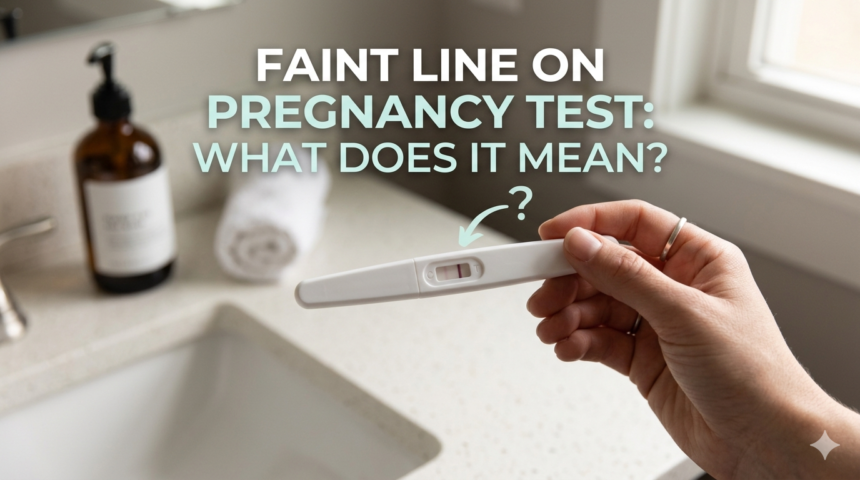
A faint line on a pregnancy test refers to a barely visible test line that appears in conjunction with the control line. These lines are crucial indicators in determining whether an individual is pregnant. Most pregnancy tests are designed to detect the presence of human chorionic gonadotropin (hCG), a hormone produced shortly after implantation occurs. When interpreting the results, it is important to identify the differences between the control line and the test line.
The control line serves as an essential benchmark, indicating that the test is functioning correctly. It appears regardless of the test outcome, while the test line signifies the detection of hCG in the urine. A faint test line indicates that hCG is present, but the lower intensity of the line suggests that the hormone levels may be low. This scenario often occurs during the early stages of pregnancy when hCG levels are typically lower than in later stages.
In certain instances, a faint line can also indicate various factors such as an early pregnancy or a possible chemical pregnancy. In the initial week after conception, the hCG levels can be insufficient to produce a darkly defined line, thus resulting in a faint appearance. It’s worth noting that the clarity of the test line can vary based on various factors including the timing of the test, the sensitivity of the pregnancy test being used, and how diluted the urine sample is.
Ultimately, a faint line should not be readily dismissed as a negative result. Instead, it should prompt further testing, either by using a different test after a few days or consulting a healthcare provider for confirmation. Early detection can provide timely insights into one’s reproductive health.
Factors that Influence the Darkness of the Line
The intensity of the line observed on a pregnancy test can be influenced by several factors, each playing a critical role in the interpretation of results. One of the primary determinants is the sensitivity of the pregnancy test itself. Different brands and models of tests exhibit varying levels of sensitivity, which means that some tests can detect lower concentrations of hCG (human chorionic gonadotropin) than others. As a result, a faint line on a highly sensitive test may indicate pregnancy at an early stage, while the same line on a less sensitive test may not be enough to confirm pregnancy.
Another key factor is the concentration of hCG in the urine at the time the test is taken. hCG is a hormone produced shortly after a fertilized egg implants in the uterus, and its levels typically rise as the pregnancy progresses. If a pregnancy test is taken too early, the hCG levels may not be high enough to produce a distinctly visible line, resulting in a faint or barely visible indication of pregnancy. Conversely, tests taken later in the cycle tend to show stronger lines, as hCG levels are usually at their peak during this time.
The timing of the test in relation to the missed period can also substantially affect the result. Tests taken before the expected menstruation may yield less reliable results, leading to faint lines due to insufficient hCG levels. Additionally, hydration levels can influence the concentration of the urine; for instance, diluted urine—resulting from high fluid intake—may lead to less visible lines due to the lower concentration of hCG. Therefore, for the most accurate portrayal of pregnancy status, it is advisable to follow the instructions on the test package and consider these various factors.
Determining the right time to take a pregnancy test is crucial for obtaining accurate results. Most pregnancy tests are designed to detect the presence of the hormone human chorionic gonadotropin (hCG), which is released shortly after a fertilized egg implants itself in the uterus. For optimal accuracy, it is generally recommended to wait until after a missed period before taking a test. This timing allows for a higher concentration of hCG to build up in the body, thereby increasing the likelihood of a positive test if pregnancy has occurred.
Typically, women have a regular menstrual cycle, and a missed period often serves as a significant indicator of potential pregnancy. For those with irregular cycles, timing may be more challenging. However, it is still advisable to wait at least one to two weeks after the expected date of the period for more consistent results.
Moreover, taking the test in the morning can also aid in achieving more reliable results. Morning urine is usually more concentrated than at other times of the day, meaning that it generally contains higher levels of hCG if pregnancy is present. As a result, conducting a pregnancy test first thing in the morning can enhance its effectiveness. If the test shows a faint line, it may indicate an early pregnancy, but it is essential to retest a few days later to confirm the result.
In summary, for the best chance of accurate results, take a pregnancy test after a missed period and use morning urine for testing. This approach helps those trying to ascertain their pregnancy status do so with increased confidence.
Interpreting Faint Lines: Positive or Negative?
Interpreting faint lines on a pregnancy test can be a source of confusion for many individuals. The presence of a faint line typically indicates that the pregnancy hormone, hCG (human chorionic gonadotropin), is present in the urine, signaling the possibility of pregnancy. However, the clarity of the line may vary based on several factors. For instance, the time of day the test was taken, how much fluid was consumed prior to testing, and how early the test was taken in the pregnancy can all affect the result’s visibility.
A faint line may still reflect a positive result, particularly if it appears within the timeframe specified by the test manufacturer. This time frame usually ranges from a few minutes to about ten minutes after taking the test. Waiting too long can lead to evaporation lines, which may resemble a faint positive but do not indicate pregnancy. Thus, if a faint line is observed within the specified time, it is advisable to consider it a potential positive result.
It is important to distinguish between faint lines resulting from early testing versus other possible issues. Chemical pregnancies or faulty tests may also lead to weak lines. If uncertainty exists after an initial test, it is generally recommended to retest after a few days. As the pregnancy progresses, hCG levels typically rise, which could produce a stronger line. Alternatively, consulting a healthcare professional for a blood test can provide a more accurate assessment of hCG levels, clarifying whether or not pregnancy is confirmed.
Common Misconceptions about Pregnancy Tests
Pregnancy tests have become widely accessible, allowing many to confirm pregnancy in the privacy of their homes. Despite their convenience, several misconceptions surround the results, particularly regarding faint lines. One common myth is that a faint line on a pregnancy test is always a sign of an unreliable result. Contrary to this belief, even faint lines can indicate the presence of the human chorionic gonadotropin (hCG) hormone, which is essential for confirming pregnancy. The intensity of the line may vary based on various factors, such as the concentration of hCG in the urine and the sensitivity of the test.
Another misunderstanding is that a negative result is definitive. It is important to note that factors such as testing too early, diluted urine, or expired tests can lead to false negatives. In such cases, taking a follow-up test after a few days can provide a more accurate reflection of one’s pregnancy status. Women may also believe that pregnancy tests can give positive results in non-pregnant states, but this is generally not the case unless specific medical conditions exist, such as certain tumors or hormonal imbalances.
Moreover, there is a common assumption that all pregnancy tests are created equal. In reality, the sensitivity of different tests can vary significantly. Some tests can detect lower levels of hCG and may yield faint lines even just a few days post-implantation, while other tests might require a higher concentration for a clear result. Hence, understanding how a particular test works and following the instructions carefully can influence the accuracy of the observations.
Addressing these misconceptions is vital as they can lead to undue stress or confusion for individuals trying to confirm a pregnancy. Therefore, it is advisable to consult healthcare professionals if there are uncertainties regarding test results, including the significance of faint lines.
What to Do if You Get a Faint Line
Receiving a faint line on a pregnancy test can lead to confusion and uncertainty about the result. It is crucial to approach the situation methodically to ascertain whether pregnancy is indeed the cause of the faint line. The first step is to allow a period of time, generally 48 to 72 hours, before retesting. Waiting a few days enables your body to build up the hormone human chorionic gonadotropin (hCG), which may result in a clearer and more definitive test result.
After the waiting period, you can retake the pregnancy test using a fresh test strip, preferably one that is highly sensitive. Be sure to follow the manufacturer’s instructions meticulously. It is often advisable to test first thing in the morning, as this is when hCG levels are usually at their highest.
In addition to retesting, consulting a healthcare professional can provide further clarity and guidance. A doctor can administer a more sensitive blood test that measures hCG levels more accurately than a home pregnancy test. This blood test can confirm whether a pregnancy is present, determining not only if you are pregnant but also how far along you may be.
Furthermore, if the faint line is observed alongside any symptoms such as missed periods, nausea, or breast tenderness, it reinforces the need to seek professional advice. Taking these steps not only supports the validation of a potential pregnancy but also ensures that if there are any underlying health concerns that need to be addressed, they can be managed promptly.
Other Causes of Faint Lines
While faint lines on a pregnancy test are commonly associated with early pregnancy, there are several other factors that may contribute to this phenomenon. Understanding these factors is essential for accurate interpretation of test results, as an incorrect assumption can lead to confusion or stress for the individual involved.
One of the most significant causes of a faint line is a chemical pregnancy. A chemical pregnancy occurs when a fertilized egg attaches to the uterine lining but fails to develop properly, leading to a very early miscarriage. In such cases, pregnancy tests may still produce a positive result due to the presence of the hormone hCG, albeit at decreased levels, resulting in a faint line instead of a clearly defined one.
In addition to chemical pregnancies, various medical conditions unrelated to pregnancy can also cause faint lines on home pregnancy tests. For instance, conditions that affect hormone levels, such as polycystic ovary syndrome (PCOS) or certain thyroid disorders, may lead to the production of hCG, potentially resulting in a misleading positive test. Moreover, certain medications, particularly those containing hCG or fertility treatments, can also influence test outcomes.
Another important consideration is the quality and accuracy of the pregnancy test itself. Using expired or faulty tests can lead to unreliable results, including faint lines. It is critical to check the expiration date and follow all instructions to ensure that the test is performing optimally.
In conclusion, while faint lines on pregnancy tests are most commonly linked to pregnancy, it is important to consider other potential causes. Chemical pregnancies, hormonal disorders, and the use of invalid tests can all lead to similar confusion. Consulting a healthcare provider for further evaluation is advisable when unclear results are obtained.
Concluding Thoughts on Faint Lines
Understanding the implications of faint lines on pregnancy tests is crucial for individuals who are navigating the complexities of potential pregnancy. A faint line may indicate the presence of the pregnancy hormone hCG; however, it does not offer a definitive answer regarding pregnancy status. Various factors can affect the visibility of the line, including the sensitivity of the test, the concentration of hCG in urine, and the timing of the test in relation to the expected menstrual cycle.
It is essential for individuals to recognize that a faint line, while suggestive of pregnancy, does not always confirm it. In cases where a faint line is observed, it is advisable to retest after a few days with a more sensitive pregnancy test or consult with a healthcare professional for a blood test. This follow-up is particularly important if there are any accompanying symptoms or if menstrual cycles remain irregular. The clarity obtained from additional testing can help in making informed decisions regarding health and potential next steps.
Ultimately, the appearance of a faint line should not be a cause for immediate alarm, nor should it lead to premature assumptions. Each individual’s situation is unique, and careful consideration, as well as professional guidance, can provide better insight. Knowing the factors that can influence test results empowers individuals to approach pregnancy testing with an informed mindset. By seeking clarity through appropriate follow-up testing and consultations, individuals can navigate their circumstances with confidence and diligence.